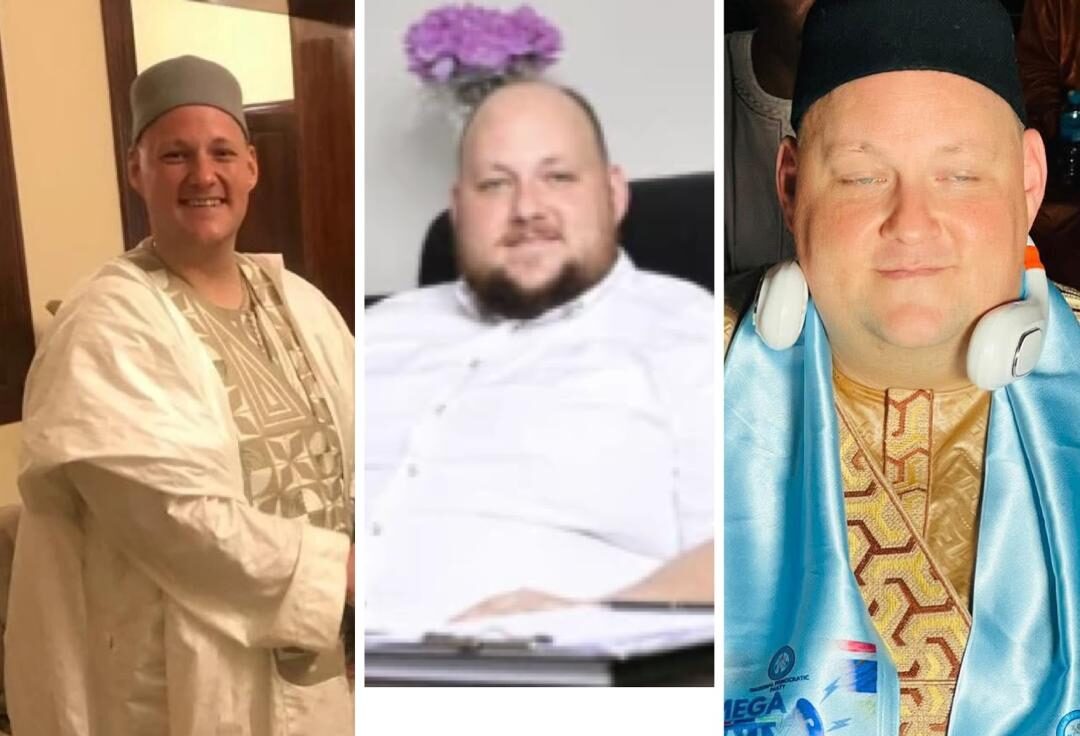

Only a few months ago, a seasoned economist and a former deputy head of mission to Guinea Bissau was forcibly retired. Though this unusual decision taken by the government was generally perceived to have been linked to a wrongdoing possibly committed by Lamin Camara, the authorities remained mute about the reasons.
In this detailed investigation, The Republic’s news editor— who interviewed a series of government officials, read an investigation report into Camara’s conduct— uncovered the seasoned economist stand accused of not only being intolerable towards colleagues but auctioning to himself an embassy vehicle, black Mitsubishi Pajero V6 for D40,000, an allegation he did not deny.
But there’s more to the story….
We rely on your donations to fund our investigations. DONATE to support our work
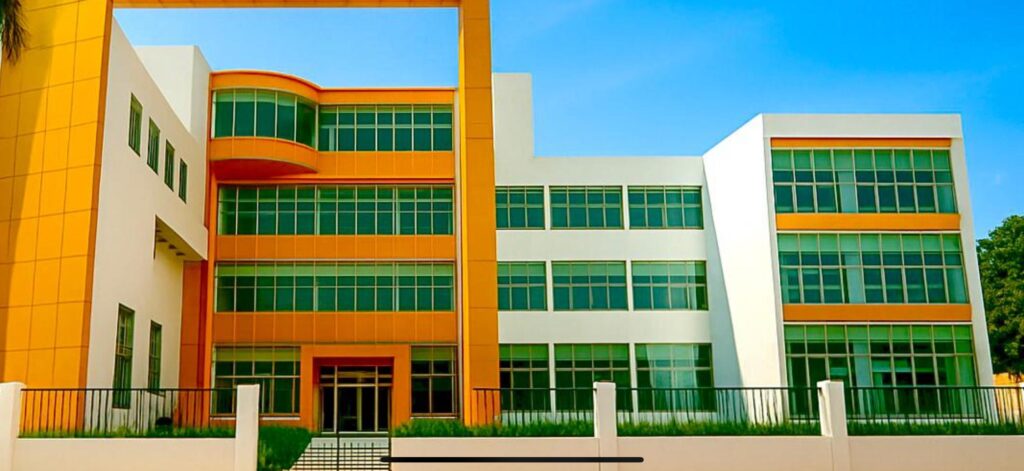

The Gambia’s foreign service has long been plagued by controversy, from an ambassador biting off a staff member’s finger in Morocco to a fistfight between diplomats in Cuba. The latest scandal, which unfolded at the Gambian embassy in Guinea-Bissau, is less violent but no less dramatic, culminating in the compulsory retirement of Deputy Head of Mission Lamin Camara.
Prior to his compulsory retirement, Camara was working under Ambassador Amie Fabureh, a former agriculture minister, with whom he had a contentious history from their time at the Ministry of Agriculture, a fact the Gambia government may not have considered when appointing Fabureh to the same embassy.
Fabureh, a seasoned agricultural expert with three decades of experience, was appointed Gambia’s ambassador to Guinea Bissau in May 2022. Lamin Camara, a trained economist and former permanent secretary at the Ministries of Finance and Agriculture, had been serving as Deputy Head of Mission in Bissau since November 2020.
The spark of conflict
On 16 December 2024, Fabureh received an early morning message from Camara. It was a PDF file which contained a string of allegations against her, a copy of which was sent to the presidency.
The scandal continued a trend of embarrassing activities at The Gambia’s foreign missions across the world from Russia, US, Morocco, Mauritania to Cuba.
After Fabureh replied to Camara’s letter with her own counter accusations submitted to the Office of the President, the PSC, having received a letter from the Chief of Staff at the Office of the President, constituted an investigation committee.
The committee comprised Musa O Sanneh (vice chair, PSC), Ganyie K Touray (Member, PSC), Sulayman Samba (Member, JSC), Abdoulie Jafuneh (Secretary, PSC), and Mustapha Nyabally (DPS, PMO).
Following a probe into the allegations, the Committee recommended Camara be “compulsorily retired” from the service in accordance with Section 8 of the Code of Conduct. The section empowers the Government to compulsorily retire an officer on attaining the age of 50 on grounds of “unsatisfactory performance”.
On 22 April 2025, the foreign ministry dispatched a letter to Camara informing him of his compulsory retirement.
In an interview with a local paper, Camara described his forcible retirement as unjustifiable and a witch hunt.
In Fabureh’s memo addressed to the Office of the President, she claimed Lamin Camara leveled the following allegations against her and staffers of the embassy, especially the interpreter, Ansumana Manneh:
- that Fabureh had wanted to take control of the financial management of the Embassy which he never allowed.
- that Fabureh still kept the 5000 euros that President Barrow donated to the Gambian community and he would not be surprised that they would prepare a fake list as beneficiaries.
- that he had issues with Fabureh at the agric ministry when he wanted to audit a project she refused and instead worked out his redeployment to Bissau to enable her to hastily distribute the materials to farmers.
- that Fabureh does not have a masters degree as she claimed and only has a diploma.
- that the former interpreter at the Embassy Ansumana Manneh falsified documents to secure COVID-19 funds and allocated 300 dollars to 28 beneficiaries including himself and his daughter.
- that Fabureh was under pressure to dismiss some local staff of the Embassy that were believed to be his sympathizers in order to pave the way for the re-appointment of Manneh as interpreter.
In July 2023, President Barrow held a meeting with the Gambian community in Bissau following an Ecowas extraordinary summit.
The Gambian community had a torrid relationship with Camara, evident in a petition the community sent to the foreign ministry demanding his immediate removal as deputy ambassador. The petition was carried on the front page of The Point newspaper in June 2022.
At that meeting, in front of President Barrow and high government officials, the speakers took turns to paint Camara in a bad light. It was an opportunity they could not afford to miss given there was no action on their petition to the headquarters a year earlier.
The criticisms against Camara were captured in the GRTS broadcast aired back home. Camara said his family and friends watched that and it pushed him to the wall.
He was recalled four months later. In fact, his fate was sealed at that very meeting as PS Lang Yabou was quoted in the investigation report saying instructions were passed to the foreign minister [who told him on the way to the airport] for Camara to be recalled.
Camara considered the urgent decision to recall him after the meeting as strange because those who talked bad about him were not even staff of the embassy and he was not allowed the chance to speak to the President.
He then submitted a letter to the Office of the President accusing the ambassador and staff of conniving against him.
That letter sparked the investigation. Asked why he chose that channel as an experienced civil servant when he could go through the foreign ministry, Camara told The Republic that he had to vent because his “recall was based on fabrications” and he had to sit at home for 15 months with no solution to his case.

Torrid past relations
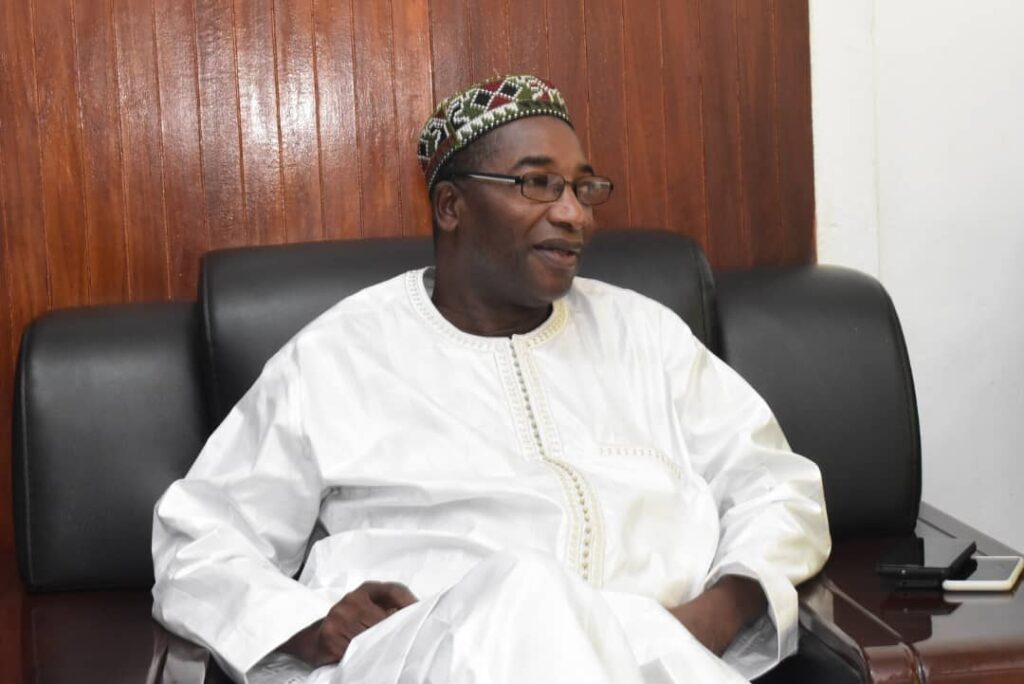
The five-member committee, which was assembled in January 2025, was tasked to conduct a thorough investigation into what happened and determine whether Lamin Camara’s actions violated any ethical standards of The Gambia civil service.
The committee assessed the opinions of Camara’s colleagues and investigated his allegations. They found almost all his allegations hold no merit and the majority of his colleagues considered him a ‘difficult person to work with’.
He however told The Republic that the investigators interviewed the wrong people. “Those they interviewed were arranged by Amie [Fabureh] and her team and those I had issues with. Why did they not interview the whole local staff?”
The committee interviewed 12 individuals altogether within four months in The Gambia and Guinea Bissau, including Camara himself. Six of them worked directly with him at the embassy.
One such colleague was the late General Lamin Bojang, who passed away in March 2025 and served as defense attaché. The former army commander was retired from the military and redeployed into the foreign service in 2012. He served as deputy ambassador in Russia and also Consul General in Jeddah, Saudi Arabia.
General Bojang resigned as DHM in Russia and joined the Gambia Action Party in October 2019. In 2023, having backed the ruling NPP in the 2021 presidential election as leader of ANRD, Bojang was appointed defense attaché in Guinea Bissau.
The ex–military officer told investigators he faced difficulties even settling down in Bissau. He accused Camara of treating him as an outsider, like someone who belonged to the barracks and not the foreign service. He told investigators that he spent a year sleeping on a mattress because Camara refused to purchase a bed or furniture for him. He said even his family slept on the floor when they visited him in Bissau.
The investigators found out General Bojang pre-financed the procurement of his bed but only received half payment in December 2024 with the remaining payments yet to be made. The investigators concluded that Camara was “rigid in his approach, intolerable towards colleagues and a poor team player with poor listening attributes.”
“This observation is evident in our interaction with Camara during which the Investigation Committee members had to plead with him to listen to their questions before jumping to conclusions,” the investigators noted.
However, while Camara’s views on his relationship with General Bojang were only briefly featured in the investigation report, he told The Republic that he only worked with the former defense attaché for three months and could not have been responsible for him sleeping on a mattress for a year.
“The time he reported we did not have funds for furniture and he said I should go to The Gambia to borrow, which I said was not going to be possible. I requested a virement but could not get it. I was later recalled,” Camara said.
Evidence indicates that General Bojang was posted to the embassy in May 2023 and Camara returned to The Gambia in November 2023. They could not have spent only three months together.
Another former colleague, Ansumana Manneh, who Camara fired as interpreter in the last days of his tenure at the embassy, described him as arrogant.
Manneh was one of the longest serving staff at the embassy, having been hired as interpreter/translator at the embassy in 2006 by Ambassador Cherno Barra Touray.
Until in 2021, when Camara sacked him, he had worked at the embassy for 15 years.
“Since I was sacked, I have been sitting at home. It was unjustifiable. Lamin’s tenure at the embassy was nothing but unhealthy and chaotic. My sustenance remains in the hands of Allah but Lamin has caused me so much suffering,” Manneh told The Republic.
Camara said he fired Manneh when he found out the interpreter doctored the list of potential beneficiaries to the Covid-19 funds by including himself and his daughter. He also found it conflicting for Manneh to serve as an executive member of the Gambian association while being on the payroll of the government.
The investigators agreed, and recommended that if Manneh would be reinstated, he must relinquish his position at the association. Manneh said he still has not been reinstated.
Not everyone has a bad review of Camara’s performance at the Bissau embassy though. Muhammed Sinayoko, a former president of the Gambian association, and Sulayman Camara, a former driver at the Gambian embassy, said he has done a good job during his time as Deputy Head of Mission. He reportedly increased staff salaries from 75,000 CFA under Ambassador Alieu Jammeh to over 120,000 CFA. Rugiatou Conteh, a cleaner, also said she had no problems working with him.
Counter accusations
Camara’s litany of allegations was equally met with counter-accusations by his colleagues. Aside from being accused of being difficult to work with or never listening to people, he was also accused of dismissing two embassy staff members after he was already recalled.
He dismissed Ansumana Manneh, the interpreter, and the driver, Siaka Jadama.
“It appeared that these dismissals were largely based on some misunderstanding with the said staff. In the case of Siaka Jadama, he was accused of passing Camara’s confidential transactions to The Gambian Community since Jadama is also a member of the Association and having been driving Camara for some time.
In the case of Ansumana Manneh, their problem was partly due to the fact that Manneh was also the Secretary General of The Gambian Association which Camara tended to see as conflicting with his official functions.
The Executive Committee of The Gambian Association made a strong plea to the Investigation Committee to prevail on the authorities to reinstate Manneh, considering his disability and having served the Embassy for such a long period of time,” the investigators noted in the report.
The biggest problem the Gambian community had with Camara was the fact that he stopped them from holding their meeting at the chancery. The community argued that they have always held their meetings at the embassy while Camara maintained that the association must inform him in advance before showing up to the diplomatic complex to hold meetings.
PS Yabou, in his conversation with the investigators, stated that it is not right for the Gambian community to hold meetings at the embassy premises.
Perhaps the most serious allegation was that Camara auctioned an embassy flag car to himself in 2021. He did not deny the allegation when the investigators asked him. Instead, he maintained that there was an open bidding and he was able to bid D40,000 to acquire the said vehicle.
The vehicle, a black Mitsubishi Pajero V6, was taken to the embassy around 2015, Manneh recalled. He claimed Lamin abused the vehicle by using it to travel to and from The Gambia, during one of the trips it had a breakdown.
Camara however told The Republic that the vehicle was “very old” and it was part of a general auction of the embassy materials in 2021. He has provided The Republic documents proving he sought approval from both Finance and Foreign Affairs ministries to auction the items at the embassy.
He claimed prior to his arrival, the norm was staff at the embassy would take these items at will. He said he refused to continue that and had sought official approval to auction the items instead. However, the trouble is, the items were auctioned by the embassy staff to themselves without following regulations on public auctions.
The Financial Regulations 2016 states the PS (Finance Ministry) should constitute a board that should ascribe a fair value to each item, ensure the items have not been tampered with during storage, and draw up an official auction list. The regulations also state that the PS should appoint the auctioneer and the auctions must be done in public.
The Republic understands that the finance attachés conducted the auction without a PS-appointed auctioneer or a valuer as stated in the law. Staff members of the embassy bought from the auctions themselves and it was never held in public.
“These were internal auction arrangements depending upon who was interested in what item. This is not the type of auction where the public in Bissau was invited. It was all internally done,” Camara replied to The Republic when asked if it was not a conflict of interest.
Documents and bank receipts indicate Camara paid 400,000 CFA (D40,000) for the vehicle in three installments from his monthly salary (150,000 CFA; 150,000 CFA; and 100,000 CFA).
“As I said, it was a general auction of which most local staff benefitted. So it is not true that I just auctioned the vehicle to myself,” he told The Republic.
Camara alleged even the ambassador, who came after the auctions, “benefitted” a deep freezer from the items, a claim Fabureh denied and provided a receipt of a freezer auctioned to one Diminga Mendes for 50,000 CFA. She told The Republic she doesn’t even know this buyer.
Receipts indicate Momodou Jallow, First Secretary, also bought a set of chairs and a refrigerator for 30,000 CFA and 40,000 CFA, respectively. Mustapha Kujabi and Sirim Sama, a security, both acquired a mattress and a chair too.
The investigators also said the 5000 euros he claimed Ambassador Fabureh kept was actually deposited into the Gambian association’s bank account while the University of Reading provided Ambassador Fabureh’s transcripts to verify her status at the school.
“Kindly check when the money was handed over to the association according to her letter. This was after 7 months. It was given around the 9th of July but accordingly delivered around February 2024. In which account was it put in? Can this be confirmed from genuine Gambians who were there to welcome the President?” he told The Republic.
And added: “For me, a transcript is not a certificate and why collect it after my writeup? The woman finished in 2008 and since then, she never collected her certificate and they kept promoting her. Is that not ridiculous?
“If a whole commission that is supposed to verify academic qualifications does not understand that a transcript is not a certificate, then I wonder what is going on. I believe if she has no master’s certificate and no first degree, then what is her qualification by paper? Will it be okay to call her a master’s holder?”
Ambassador Fabureh argued that the only reason she has not yet secured her certificate is an outstanding arrears at the university amounting to £17,795.23. The Republic understands the government is yet to settle this arrear.
As regards his allegation that the embassy’s interpreter falsified documents to secure Covid funds, Manneh confessed to receiving 150 euros while his daughter, 300 dollars. The Investigation Committee found out that only 6 of the 28 beneficiaries might have been genuine beneficiaries.
The Republic understands the National Audit Office is currently conducting an audit of the embassy.
A pattern of scandals
The Gambia government has repeatedly investigated the persistent scandals at its missions across the world but the outcomes never see the light of day.
In 2018, just at the infancy of the coalition government, Alhassana Jammeh, The Gambia’s ambassador to Morocco, bit off the finger of a staff member, leading to his recall.
In 2019, Samba Camara Mballow allegedly got involved in a fraud and sex scandal at the embassy in Pretoria, South Africa. There was an online petition to recall Mballow that apparently landed on deaf ears.
The Gambia’s mission in Russia was rocked with a sex scandal in February 2021, leading to the recall of deputy ambassador Yankuba Saidy.
The scandals spread to the country’s mission in Washington in July 2023 when the US government expelled four Gambian diplomats; Abdu Cham, Pa Sako Darboe, Alhagie Babou Joof, and deputy ambassador Mustapha Sosseh for various alleged offenses including fraud, battery, and illicit schemes.
In May 2024, Jerreh Jammeh was recalled as deputy ambassador in Nouakchott over his alleged embezzlement of $5000 which President Barrow donated to Gambians in Mauritania. Jammeh refused to return, protesting innocence.
In February last year, The Gambia’s ambassador to Cuba Sheikh Tijan Hydara and his deputy Vincent Mendy were both recalled after being involved in a fist fight. The government sent a factfinding mission to Havana headed by the Secretary General, Salimatta Touray (now The Gambia’s ambassador to Addis Ababa).
In each of these incidents, including the recent one in Bissau, the government failed to make public any investigation report or punitive measures that may have been taken as a result of the alleged wrongdoings investigated.
Camara told The Republic that the Investigation Committee has refused to share the findings with him.
“My compulsory retirement recommendation was accidentally done,” he said. “I do not think I did so much wrong in Bissau to overshadow my overall performance in the civil service since 1990.”
We rely on your donations to fund our investigations. DONATE to support our work